Thursday, October 29, 2015
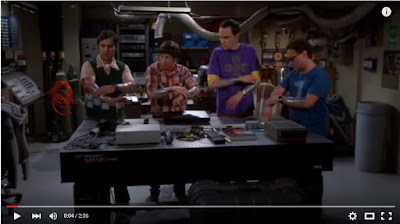
Does Your Brainstorming Sessions Resemble The Big Bang Theory's Changing the World Meeting?
Although the short clip of The Big Bang Theory is funny, there is a very important take away from the video that businesses should think about regarding their innovative or creative thought processes. Every company should ask the following questions and be able to answer them quickly and effectively.
1. How does your team stay focused in think tank groups or brainstorming sessions?
2. How does your team capture the ideas from these sessions?
3. Does that brainstorming process push your team beyond its borders?
4. How long does your process take? Is the process cost-effective?
5. Does your team use or have a process for brainstorming?
6. Most importantly, does your process work?
These are some of the questions, that teams need to ask themselves so that they do not waste their time and money. Six Hats and Lateral Thinking are excellent tools that will keep your team focused on its objectives and expand its creative and innovative solutions. Imagine the possibilities if your team spent more of its time executing your ideas rather than brainstorming for ideas.
de Bono Consulting challenges each team to change their world for the better and by changing their world, they will be changing everyone's world. Is your team changing the world?
By de Bono Consulting
Thursday, October 22, 2015
Have Debates Stalled Your Projects, Try Using Your Hats
Everyone has been on a team project where
the project stalled due to lack of possible solutions. This problem reminds me
of a team project called Synapse that the Defensed Advanced Research Projects
Agency and IBM faced.
How did these scientist find new possible
solutions? What brainstorming activity did they use when everything looked
hopeless?
According to the New York Times article
by Dharmendra S. Modha, the team of 25 participants crowd a room to go through
a Six Hats brainstorming exercise.
This exercise allowed the team to use a blueprint that removed the teams
emotions and tap into the creative possibilities to finish the Synapse project.
This blueprint became the standard for all challenges the team
encountered in the future.
Below are the most important takeaways the
team took away per the Dharmendra S. Modha:
1. Identify problems and confront them
proactively.
2. Under deadline pressure, use a flat
management structure, allowing people to contribute ideas rapidly.
3. To sustain morale and keep team members
engaged and productive, share credit for successes and learn from failures.
4. Remember that the creative potential of
committed individuals, if harnessed properly, has great potential to bring
constructive change.
So the next time you encounter an unsolvable
problem, look to the Six Hats for
a blueprint to solve the problem.
By de Bono Consulting
Friday, June 19, 2015
Mind Puzzle Answer
Did you solve last Friday's mind puzzle?
The answer:
- Place the horses back to back.
- Have the riders piece positioned horizontally.
- Place the puzzle piece on top of the horses.
Now that you have the answer, give this puzzle to your co-workers and see how long it takes them to solve the puzzle. Do they have creative minds?
Friday, June 12, 2015
Mind Puzzle
Get your creative juices flowing with this mind puzzle! Cut out the three images below. Without cutting or tearing any of the pieces, put the jockeys on the horses.
How long did it take you to figure out the puzzle? For fun, have your colleagues test this out too!
Can't figure out how the puzzle fits together? Contact us or wait until next Friday to find out!
How long did it take you to figure out the puzzle? For fun, have your colleagues test this out too!
Can't figure out how the puzzle fits together? Contact us or wait until next Friday to find out!
Friday, March 20, 2015
Friday, March 13, 2015
Friday, March 06, 2015
Friday, February 20, 2015
Wednesday, January 21, 2015
Leading Innovation coming to San Diego
Are you looking to
give your team the tools to become successful at creating innovative solutions
and effective decision making?
de Bono Consulting is offering a Leading Innovation seminar in San Diego on February 17-19. The Leading Innovation seminar offers training in Six Thinking Hats and Lateral Thinking techniques, which can help you and your team apply a systematic method of thinking to make the best decisions faster, smarter, and more efficiently.
The master trainer will teach you the skills to apply the Six Thinking Hats technique of separating thoughts and ideas into six different categories. This technique helps streamline discussions so you and your team can easily redirect and focus on the issues and create the best decision.
You'll also learn the Lateral Thinking method. This method is based on research by Dr. Edward deBono, and trains a person to use creative thinking skills to develop solutions by thinking outside of the box.
Sign up today!
de Bono Consulting is offering a Leading Innovation seminar in San Diego on February 17-19. The Leading Innovation seminar offers training in Six Thinking Hats and Lateral Thinking techniques, which can help you and your team apply a systematic method of thinking to make the best decisions faster, smarter, and more efficiently.
The master trainer will teach you the skills to apply the Six Thinking Hats technique of separating thoughts and ideas into six different categories. This technique helps streamline discussions so you and your team can easily redirect and focus on the issues and create the best decision.
You'll also learn the Lateral Thinking method. This method is based on research by Dr. Edward deBono, and trains a person to use creative thinking skills to develop solutions by thinking outside of the box.
Sign up today!
Wednesday, December 31, 2014
Happy New Year!
de Bono Consulting will be closed on Thursday, January 1st and will return on Friday, January 2nd.
We cannot wait to work with you and meet your needs in 2015. Happy New Year!
Tuesday, December 23, 2014
Happy Holidays!
Wednesday, June 25, 2014
Upcoming Six Hats Workshops
Public service announcement: we have a few seats left at our upcoming Six Thinking Hats and Lateral Thinking workshops in Chicago, July 15-16:
These public programs are also a good opportunity to attend trainer certification in Six Thinking Hats or Lateral Thinking. See our trainer certification page for additional details, or give us a call at 515.278.1292.
- Six Thinking Hats (July 15): $999
- Lateral Thinking (July 16): $999
- Six Hats + Lateral: $1599
These public programs are also a good opportunity to attend trainer certification in Six Thinking Hats or Lateral Thinking. See our trainer certification page for additional details, or give us a call at 515.278.1292.
Tuesday, August 13, 2013
LeftoverSwap
A creative new iPhone app is generating buzz: LeftoverSwap. The idea? To share leftover food between strangers.
Love it or hate it, it's definitely a provocative idea. After one gets past the initial red hat ("Ugh, gross!"), there are definitely some strong yellow hat benefits, in terms of reducing food waste, feeding hungry people, helping other people to stretch their dollars, minimizing our carbon footprint, and creating social connections between people.
What other yellow and black hat can you think of?
Love it or hate it, it's definitely a provocative idea. After one gets past the initial red hat ("Ugh, gross!"), there are definitely some strong yellow hat benefits, in terms of reducing food waste, feeding hungry people, helping other people to stretch their dollars, minimizing our carbon footprint, and creating social connections between people.
What other yellow and black hat can you think of?
Wednesday, August 07, 2013
Beta Test our new Innovation Assessment (v3.0)
We're soon launching the third beta test of our new innovation assessment - and we need your help!
The feedback from the first two rounds of testing has been overwhelming positive, and we're eager to see what improvements that R&D department has cooked up.
This is a team-based innovation assessment that focuses on the culture of innovation within a team or organization. We posit that innovation is a function of two variables:
The time commitment is 15-20 minutes to complete the online assessment, 2-3 hours for a team workshop to discuss the results, and 5 minutes for an online survey about the experience. We also ask the team leader for a 30-minute phone interview.
Want to join? We'd love your input! Email beta "at" debonoconsulting.com to participate.
The feedback from the first two rounds of testing has been overwhelming positive, and we're eager to see what improvements that R&D department has cooked up.
This is a team-based innovation assessment that focuses on the culture of innovation within a team or organization. We posit that innovation is a function of two variables:
- Individual team members' personal attitudes towards innovation
- The group culture and how it enhances (or impedes) innovation
The time commitment is 15-20 minutes to complete the online assessment, 2-3 hours for a team workshop to discuss the results, and 5 minutes for an online survey about the experience. We also ask the team leader for a 30-minute phone interview.
Want to join? We'd love your input! Email beta "at" debonoconsulting.com to participate.
Labels:
beta test,
innovation,
innovation assessment
Friday, September 28, 2012
New Innovation Assessment: Project da Vinci
Want to beta test an exciting, new innovation assessment?
Project da Vinci, a new product initiative for 2013, has just gone into beta. This program explores the question of how organizations foster and maintain an innovative culture? We hypothesize that organizational innovation is a function of (1) individual behavioral styles and (2) group dynamics. Project da Vinci explores this question using individual and team self-assessments.
We're looking for existing, intact teams that consider themselves innovative, are working on an innovative project, or have an interest in innovation.
Our beta testers will receive a detailed, highly personalized report of their individual innovation styles, including suggestions for recognizing and adapting to colleagues' styles. You will also receive a team report, offering insights and guidance on how group dynamics affect (positively or negatively) the team's ability to innovate. Plus, you'll get a sneak preview of a very exciting new product, and your feedback will shape how it ultimately looks, feels, and works.
Interested? To participate, please let us know at davinci@debonoconsulting.com, or see our Project da Vinci webpage for additional details.
Project da Vinci, a new product initiative for 2013, has just gone into beta. This program explores the question of how organizations foster and maintain an innovative culture? We hypothesize that organizational innovation is a function of (1) individual behavioral styles and (2) group dynamics. Project da Vinci explores this question using individual and team self-assessments.
We're looking for existing, intact teams that consider themselves innovative, are working on an innovative project, or have an interest in innovation.
Our beta testers will receive a detailed, highly personalized report of their individual innovation styles, including suggestions for recognizing and adapting to colleagues' styles. You will also receive a team report, offering insights and guidance on how group dynamics affect (positively or negatively) the team's ability to innovate. Plus, you'll get a sneak preview of a very exciting new product, and your feedback will shape how it ultimately looks, feels, and works.
Interested? To participate, please let us know at davinci@debonoconsulting.com, or see our Project da Vinci webpage for additional details.
Labels:
innovation assessment,
project da vinci
Tuesday, September 25, 2012
The State of Create
Adobe and consultancy StrategyOne have released an international creativity study, the State of Create Global Benchmark. Before we get to their conclusions, I have two quick caveats. One, yes, I'm late to party on this one. Mea culpa. Two, I have some concerns about their methodology. Specifically, the report offers little information about their methodology, and the some of the phrasing slants in one direction. Together, these two facts make me question the report's objectivity. Regardless, I always welcome new research on creativity and innovation, so I'm pleased to read this report.
Their summary of drivers of and barriers to creativity includes two statements that I agree are bang on:
1. "People need more time, training and an environment where they can think creatively."
2. "A majority of people prefer to create by themselves."
Yes, absolutely, on both counts. Creative thinking is hard work, and it requires a specific time and place where the thinker can concentrate. It's important to take time out from one's everyday routine in order to think creatively.
As the benchmark notes, innovation also requires training. It's insufficient to say, "Okay, team, today we're going to think out of the box! I want 50 new ideas!" That's all well and fine, but innovation requires snapping the brain out of its habitual thought patterns. There are many techniques for accomplishing this - we, of course, are particularly fond of Six Thinking Hats and Lateral Thinking - but the specific methodology is less important than getting participants' brains out of their comfort zones.
The second point also illustrates the importance of allowing time and space for individual thinking. Particularly in a group setting - such as stereotypical office brainstorming sessions - people nonetheless do their best thinking by themselves. The most effective ideation meetings include time for individual thinking as well as group feedback and analysis.
Their summary of drivers of and barriers to creativity includes two statements that I agree are bang on:
1. "People need more time, training and an environment where they can think creatively."
2. "A majority of people prefer to create by themselves."
Yes, absolutely, on both counts. Creative thinking is hard work, and it requires a specific time and place where the thinker can concentrate. It's important to take time out from one's everyday routine in order to think creatively.
As the benchmark notes, innovation also requires training. It's insufficient to say, "Okay, team, today we're going to think out of the box! I want 50 new ideas!" That's all well and fine, but innovation requires snapping the brain out of its habitual thought patterns. There are many techniques for accomplishing this - we, of course, are particularly fond of Six Thinking Hats and Lateral Thinking - but the specific methodology is less important than getting participants' brains out of their comfort zones.
The second point also illustrates the importance of allowing time and space for individual thinking. Particularly in a group setting - such as stereotypical office brainstorming sessions - people nonetheless do their best thinking by themselves. The most effective ideation meetings include time for individual thinking as well as group feedback and analysis.
Thursday, August 23, 2012
Innovation Fridays at Garage Games
Digital Journal sends us to video game company Garage Games, which has implemented Innovation Fridays to give employees time and space to work on creative projects of their own devising. We wholeheartedly applaud this decision; it's our experience that giving time and space for individual thinking is an essential element of the innovation process. Kudos to Garage Games.
Friday, August 17, 2012
More on Six Thinking Hats: The (Non)-Musical
Quick follow-up to my previous posts (here and here) on Asher Treleaven's Six Thinking Hats stand-up comedy routine.
First, the Guardian reviews Edinburgh fringe. Of Treleaven's show, they say, "Not many comics could get away with introducing their show as 'like a comedy TED talk', but Treleaven always walks a fine line between the intellectual and the physical – he sums up his show as 'Daddy issues, juggling and ball cancer'. It's a slick blend of physical comedy, beat poetry, circus skills and some nicely crafted lines – he describes a fellow performer as 'the sort of woman who would try to give you echinacea for Aids' – but you can't help feeling at the end that you wanted to know more, or at least to see beneath the carefully polished surface."
Second, the Independent gives Treleaven a column in which he muses about art vs. sport, or the decision to attend Edingburgh fringe vs. the Olympic Games. He also summarizes the different hats, although I fear he rather makes a hash of yellow and black. It's completely wrong to call the yellow hat "speculative creativity," whatever that means. Regular readers of this blog know that the yellow hat represents benefits and positive outcomes, not creativity (whether speculative or otherwise).
As for the black hat, Treleaven calls it "the Black Hat of critical thinking and decision-making," which is both imprecise and flat-out wrong. The statement is imprecise in that the black hat is "critical thinking" in the sense of "criticizing" or "identifying problems," not in the larger sense of "logic and analysis" (which in fact is a property of all six hats). Furthermore, the statement is wrong in that the decision-making hat is the Blue Hat, which controls the thinking process and determines next steps.
On balance, however, I'm still endlessly entertained by the idea of a Six Thinking Hats stand-up routine (or, for that matter, a Six Thinking Hats musical), and I do hope to catch a performance sometime. Has anybody seen the show? I'd love to hear your thoughts.
First, the Guardian reviews Edinburgh fringe. Of Treleaven's show, they say, "Not many comics could get away with introducing their show as 'like a comedy TED talk', but Treleaven always walks a fine line between the intellectual and the physical – he sums up his show as 'Daddy issues, juggling and ball cancer'. It's a slick blend of physical comedy, beat poetry, circus skills and some nicely crafted lines – he describes a fellow performer as 'the sort of woman who would try to give you echinacea for Aids' – but you can't help feeling at the end that you wanted to know more, or at least to see beneath the carefully polished surface."
Second, the Independent gives Treleaven a column in which he muses about art vs. sport, or the decision to attend Edingburgh fringe vs. the Olympic Games. He also summarizes the different hats, although I fear he rather makes a hash of yellow and black. It's completely wrong to call the yellow hat "speculative creativity," whatever that means. Regular readers of this blog know that the yellow hat represents benefits and positive outcomes, not creativity (whether speculative or otherwise).
As for the black hat, Treleaven calls it "the Black Hat of critical thinking and decision-making," which is both imprecise and flat-out wrong. The statement is imprecise in that the black hat is "critical thinking" in the sense of "criticizing" or "identifying problems," not in the larger sense of "logic and analysis" (which in fact is a property of all six hats). Furthermore, the statement is wrong in that the decision-making hat is the Blue Hat, which controls the thinking process and determines next steps.
On balance, however, I'm still endlessly entertained by the idea of a Six Thinking Hats stand-up routine (or, for that matter, a Six Thinking Hats musical), and I do hope to catch a performance sometime. Has anybody seen the show? I'd love to hear your thoughts.
Monday, August 13, 2012
The Blind 'I' of DMAIC
Shameless plug: there's still time to register for our free, one-hour webinar, The Blind 'I' of DMAIC. This webinar explores the connection between innovation and process improvement. Our Master Trainer has decades of experience applying Edward de Bono's thinking tools, Six Thinking Hats and Lateral Thinking, to Lean Sigma programs at blue chip companies.
In his experience, most process improvement initiatives are extremely good at DMAC - in other words, at defining the situation, measuring variables, analyzing the data, and controlling the new solution. Where they fail is the "I" - the improvement. Most Lean Sigma programs spend very little time thinking about how to improve the status quo process - instead, they implement the first solution that springs to mind.
This webinar will teach process improvement professionals how to apply Six Thinking Hats and Lateral Thinking to DMAIC programs to radically improve the quality and efficacy of operational improvements.
The Blind 'I' of DMAIC is Thursday, August 16, at 11:00 Central. Register today for this free process improvement innovation webinar.
In his experience, most process improvement initiatives are extremely good at DMAC - in other words, at defining the situation, measuring variables, analyzing the data, and controlling the new solution. Where they fail is the "I" - the improvement. Most Lean Sigma programs spend very little time thinking about how to improve the status quo process - instead, they implement the first solution that springs to mind.
This webinar will teach process improvement professionals how to apply Six Thinking Hats and Lateral Thinking to DMAIC programs to radically improve the quality and efficacy of operational improvements.
The Blind 'I' of DMAIC is Thursday, August 16, at 11:00 Central. Register today for this free process improvement innovation webinar.
Thursday, August 09, 2012
Six Thinking Hats: The Musical
No, not really. But Australian humorist Asher Treleaven is back in the news with his stand-up routine based on the Six Thinking Hats. Treleaven is performing at the Edinburgh Festival, and the Huffington Post brings us an interview. We first wrote about Treleaven's Six Hats routine back in April.
Subscribe to:
Posts (Atom)


